Measure late in the day
Feet swell over the course of a day. A shoe fitted first thing in the morning can feel tight by the afternoon, which is exactly when a child is still wearing it.
Bring the socks that will actually be worn to school. School socks are usually thicker than the ones worn at home, and that difference is often a half size.
Leave a thumb’s width, not more
Press down at the toe with the child standing. About a thumb’s width between the longest toe and the end of the shoe is right — enough to grow into for a few months without the heel sliding.
More than that and the foot slides forward with every step, which is how blisters start and how the toe wears through first. Buying two sizes too big usually makes the pair last less, not more.
Check the sole before the upper
Bend the shoe. It should flex where the foot flexes — at the ball, not in the middle of the arch. A shoe that folds in half anywhere gives no support.
Look at the tread. A flat, hard sole is a slipping hazard on wet corridors and on the way to school. Some pattern is worth paying slightly more for.
Press the heel counter — the stiff cup at the back. If it collapses under thumb pressure, the shoe will not hold the heel in place for long.
Go before the rush
The weeks right before a new session are when the widest range of sizes sells through fastest. Going a few weeks earlier means more choice in the size you actually need.
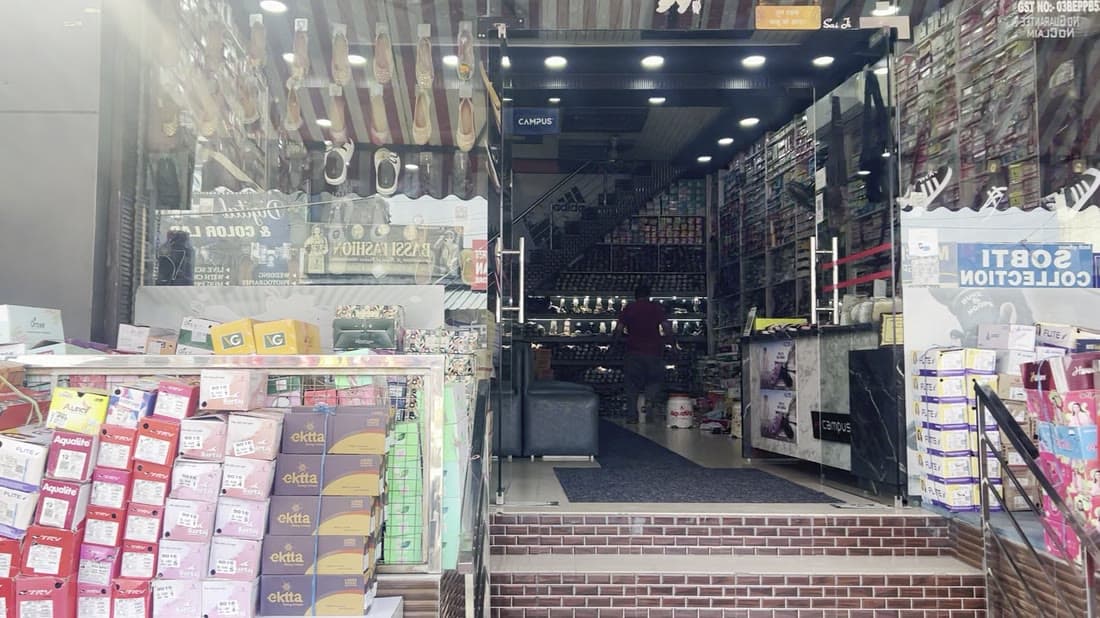
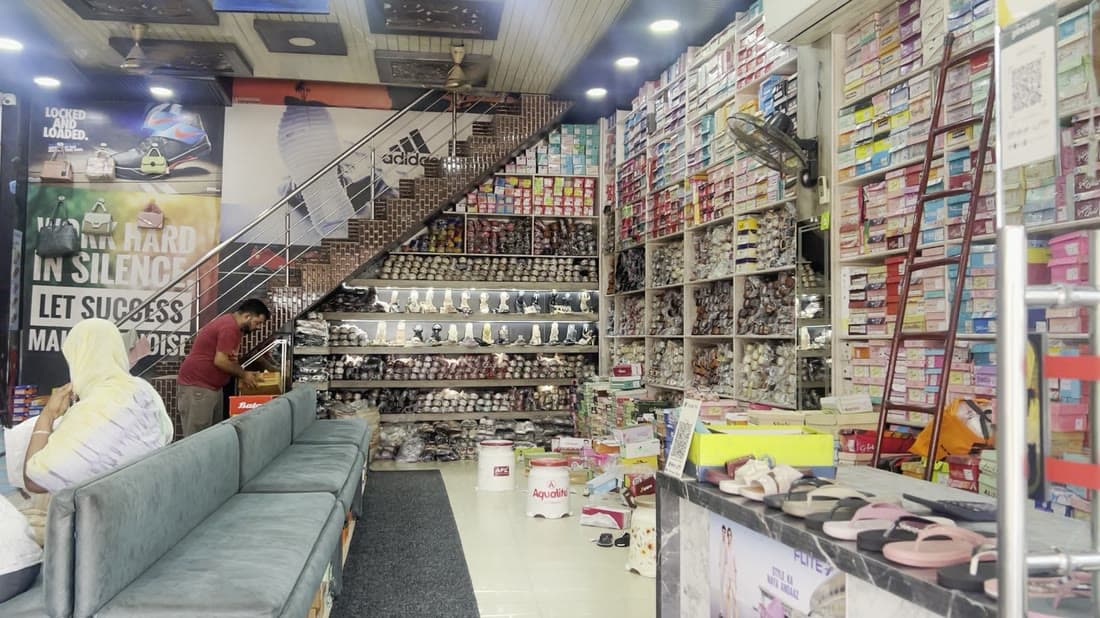
Most schools need both a black formal pair and a white sports pair. Both are on the shelf here, so it is one visit rather than two.
Come and try a few pairs
Fit is the part that cannot be settled online. The shop is open daily except the last Sunday of the month, and there are benches down the middle for exactly this.