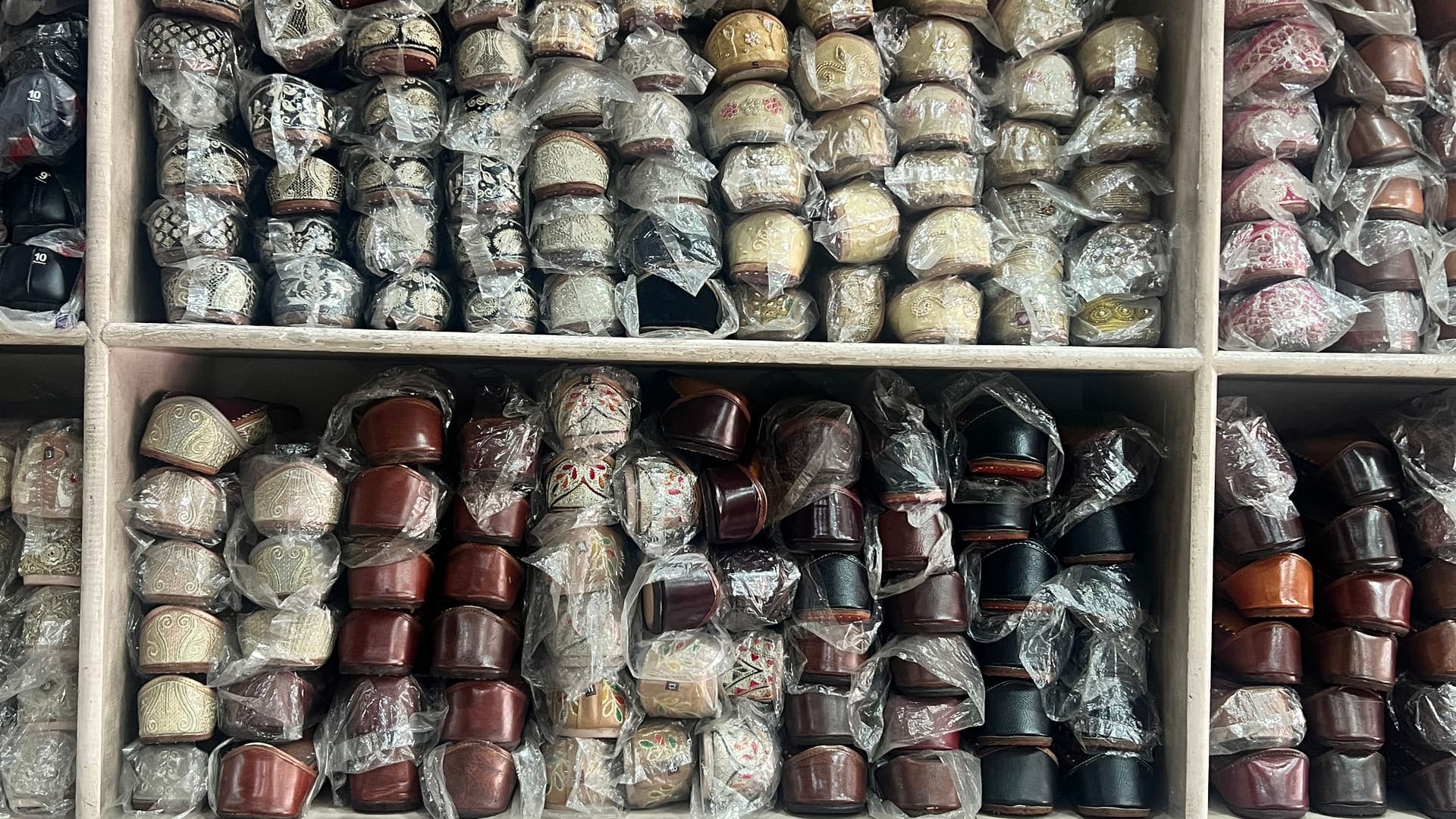
Bring the outfit, or a photograph of it
Gold tilla and silver tilla look similar under shop lighting and quite different next to an actual suit or sherwani. The difference is obvious with the cloth in hand and invisible from memory.
As a general rule, heavier work on the outfit calls for lighter work on the jutti, and vice versa. When both compete, neither reads well.
Fit a jutti slightly differently
A jutti has no laces and no strap, so it is held on by shape alone. It should be snug across the widest part of the foot from the start — a loose jutti will slip at the heel all day.
Leather juttis give a little with wear, so a pair that is firm but not painful on day one is usually right. If you will be standing for hours, say so — a flatter, softer sole is noticeably easier over a long function.
Buy earlier in the season
Wedding juttis sell by size and colour together, and the fortnight before a popular date is when a specific combination is hardest to find.
Families usually buy several pairs at once. Doing it in one visit makes it far easier to keep the tones consistent across the group — and children outgrow shoes between the booking and the wedding, so check the fit again closer to the date.
Come and try a few pairs
Fit is the part that cannot be settled online. The shop is open daily except the last Sunday of the month, and there are benches down the middle for exactly this.